What makes candlepin different
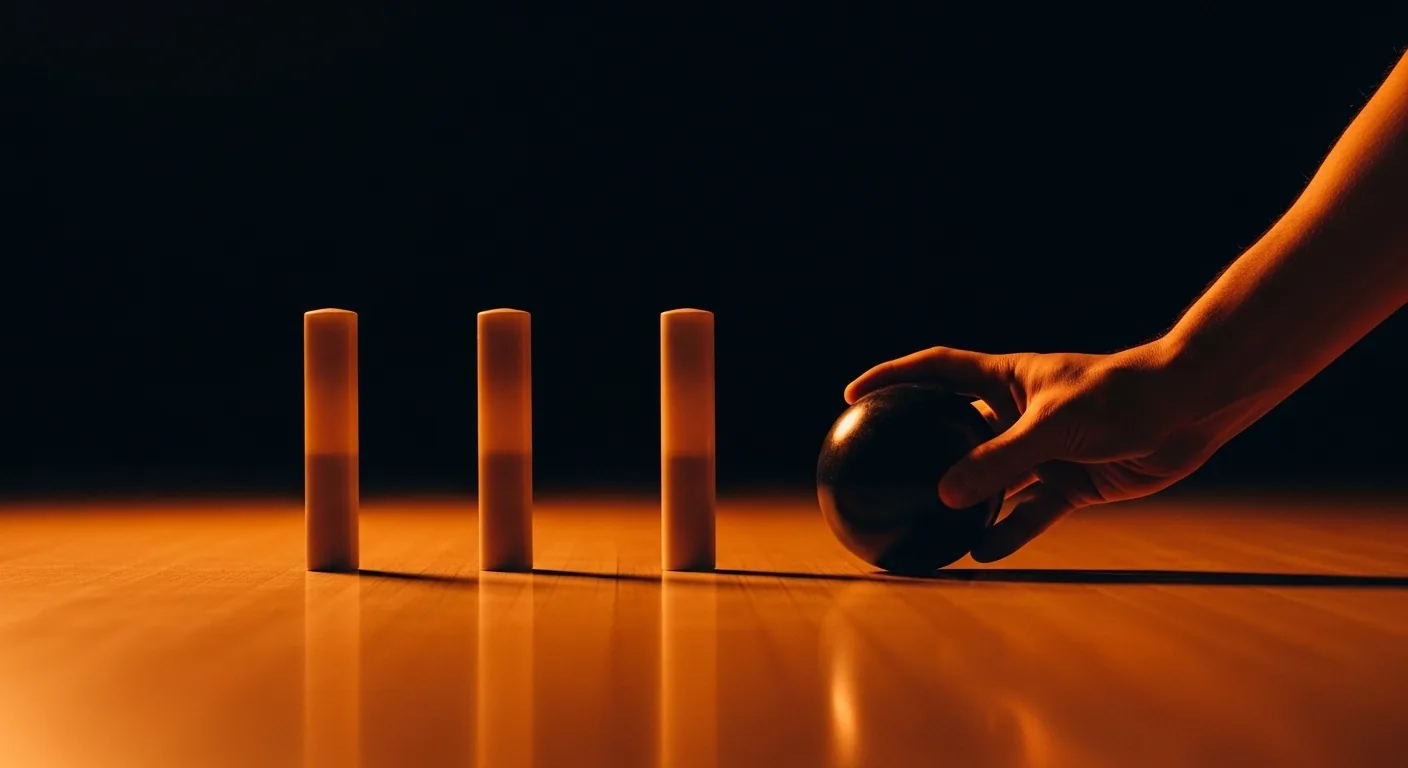
Candlepin uses tall, thin, nearly cylindrical pins (shaped a bit like candles, hence the name) and a small, light ball with no finger holes — you cradle it in your palm. Because the ball is so light relative to the pins, candlepin is famously difficult: knocking everything down is far harder than in tenpin.
Three balls per frame
To compensate for the difficulty, candlepin gives bowlers three balls per frame (versus tenpin's two). Strikes and spares still exist, but they're prized — a candlepin strike is a genuine accomplishment.
The 'wood' stays
Here's the rule that defines candlepin strategy: fallen pins, called 'wood,' are not cleared between balls. Downed pins stay on the lane and become part of the game — you can carom your next ball off the wood to knock down standing pins. This turns each frame into a little geometry puzzle and is unique among the major pin games.
Scoring and culture
Candlepin scoring follows the familiar ten-frame structure, but because perfect games are extraordinarily rare, high scores look very different from tenpin. The game has a deeply regional, almost familial culture in New England, with local leagues, longtime alleys, and a once-thriving tradition of televised candlepin that older fans remember fondly.
Why it endures
Candlepin survives because it's hard in a charming way and because regional loyalty runs deep. It's a reminder that 'bowling' was never one game — it's a family of them, shaped by place. If tenpin's hook game is about ball motion, candlepin is about touch, angles, and reading the wood.