Ancient roots
Artifacts resembling bowling implements have been found in remarkably old contexts, and various ancient cultures played games of rolling or throwing stones at targets. While we should be cautious about drawing a straight line from any single ancient game to modern bowling, it's clear the basic human impulse — roll something, knock something down — is extraordinarily old and appeared independently in many places.
Kegling and the German church
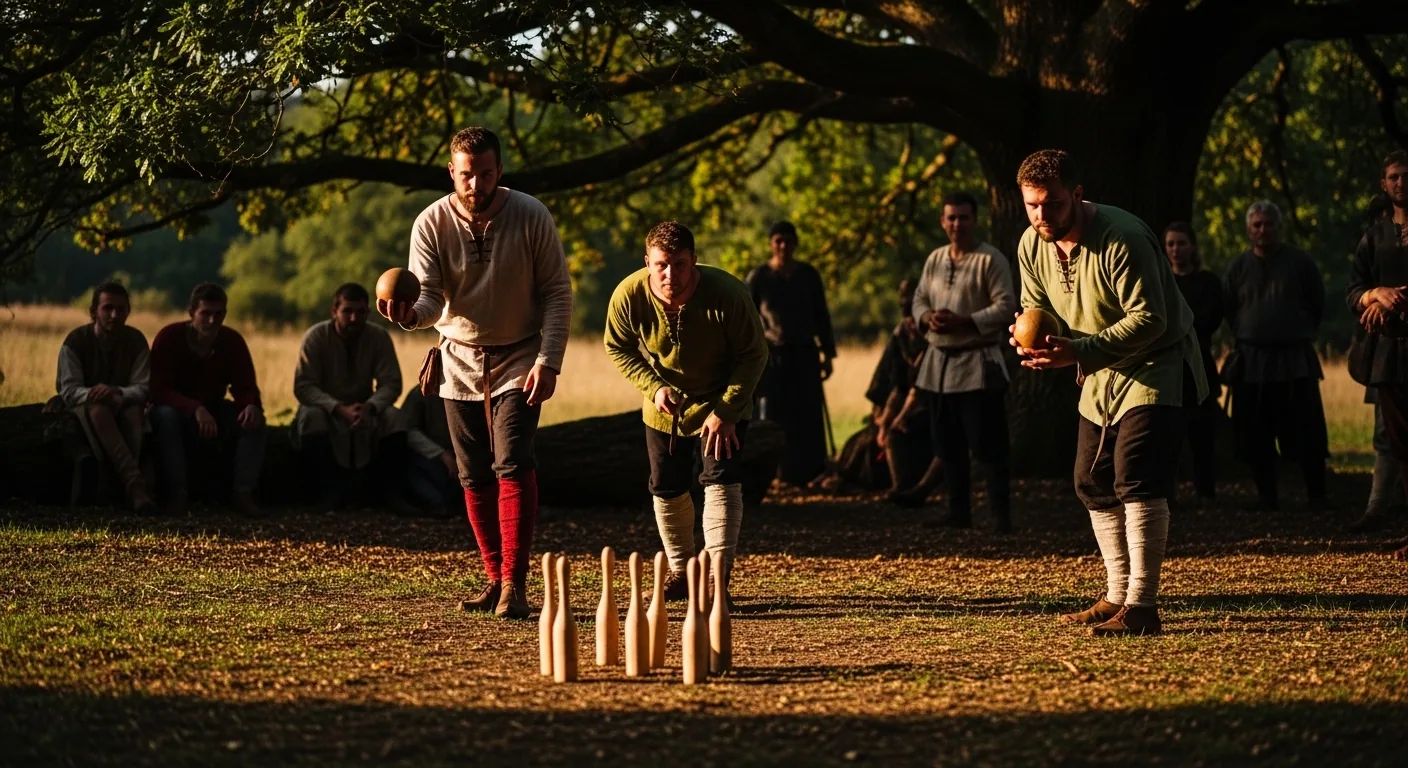
One of the most-cited threads in bowling's history runs through medieval Germany, where a game called kegeln involved rolling at kegels — clublike pins. By some accounts the activity carried a ritual or even religious dimension, with knocking down the pin symbolizing the defeat of a metaphorical adversary. The terms 'kegler' and 'kegling' for a bowler and the activity survive in bowling vocabulary today.
Lawn bowling in Europe
In medieval England and across Europe, rolling games on grass flourished — the ancestors of today's lawn bowls and, on the continent, games like bocce. These target-rolling games were popular enough that authorities at times tried to restrict them, reportedly because they distracted from more militarily useful pursuits like archery practice. Bowling has always been a little bit subversive.
Crossing to America
European settlers carried their rolling games across the Atlantic. Variants of ninepins became widespread in colonial and early America — popular enough to appear in folklore and to draw the same mix of enthusiasm and official disapproval the games had attracted in Europe. The eventual shift from nine pins to ten is part of the sport's American chapter, setting the stage for the standardized tenpin game.
From many games to one
What we call 'bowling' today is really the survivor and synthesis of countless regional rolling games. The standardization of tenpin — fixed pin layout, lane dimensions, and rules — turned a sprawling folk tradition into an organized sport. But the older cousins never disappeared: candlepin, duckpin, five-pin, bocce and bowls all still thrive, which is exactly why we cover the whole family.