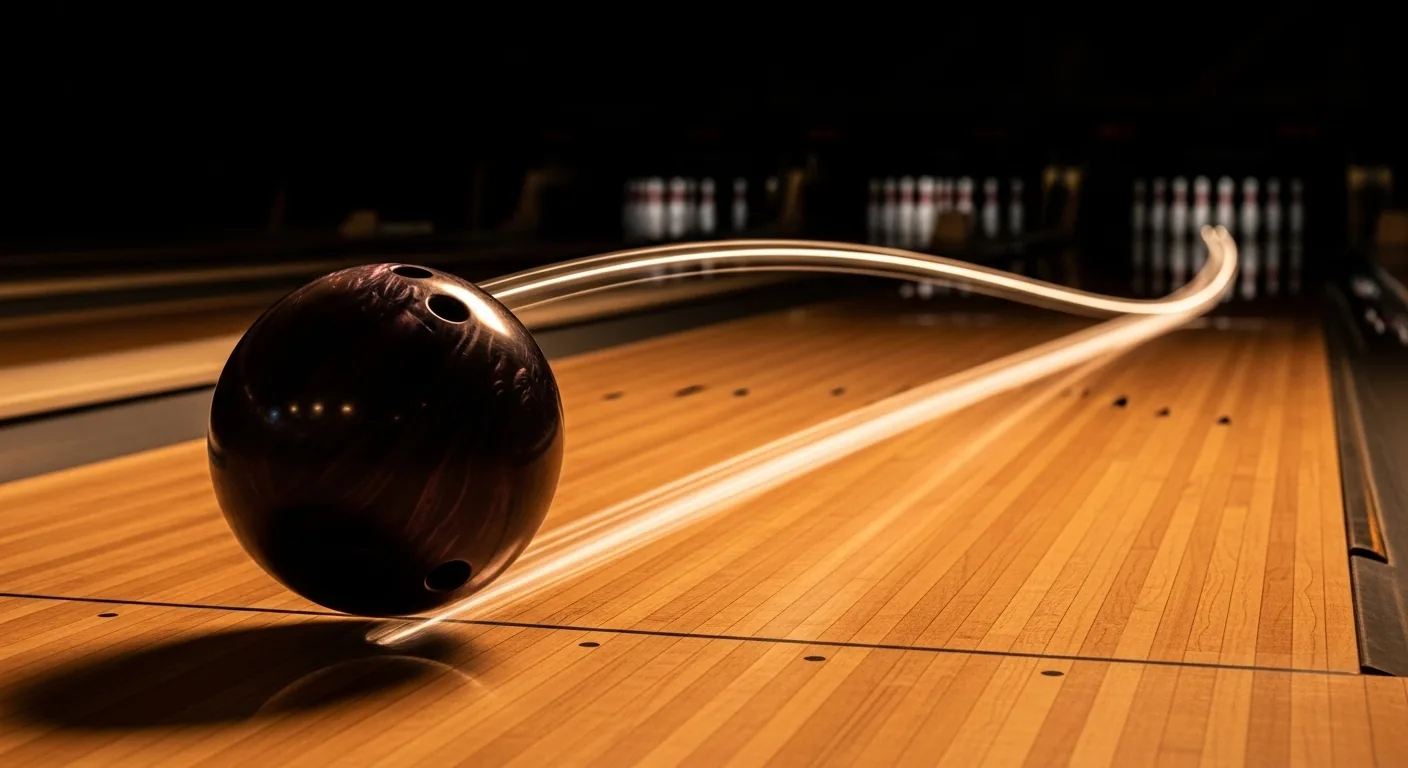
Why a ball hooks
A hook happens when a spinning ball meets friction. As the ball travels down the oiled lane it slides, but its rotation (imparted by your release) is constantly trying to grip the surface. Where the oil thins out — typically the last 15 feet and the outside boards — the rotation finally bites, and the ball changes direction toward the pocket. No spin, or no friction, means no hook. Both are required.
Axis rotation and axis tilt
Two properties of your release shape the hook. Axis rotation (sometimes called side roll) is how much the ball is turning side-to-side versus end-over-end — more rotation means a sharper, later hook. Axis tilt is how much the ball is spinning like a tilted top; higher tilt spreads the contact and changes the read. Together with rev rate they define your 'ball motion fingerprint.'
Building a hook from a straight ball
If you currently throw straight, here's the progression most coaches teach:
- Start with a relaxed, on-time release and a fitted fingertip grip — you can't hook well without these.
- At the bottom of the swing, let your hand stay behind and slightly to the side of the ball, fingers lifting up the side rather than straight up the back.
- Keep the thumb relaxed so it exits first; the fingers then 'roll' up the side, imparting rotation.
- Resist the urge to flick or turn hard with the wrist — the rotation comes from the fingers and natural hand position, not a violent twist.
A reactive resin ball (see bowling balls) hooks far more readily than house plastic, so equipment is part of the equation.
How much hook do you need?
More hook isn't automatically better. What matters is entry angle and consistency. A moderate, controllable hook that reliably finds the pocket will outscore a huge, unpredictable hook. Many of the best bowlers play 'down and in' with a controlled motion rather than chasing maximum curve. Build a repeatable hook first, then increase it only as your accuracy holds.
The role of the lane
The same release produces different hooks on different oil patterns. A dry house shot lets the ball hook a lot; a long, flat sport pattern suppresses hook and demands precision. Understanding this is the bridge from technique to lane play — the skill of adjusting your line and ball to what the lane is giving you.
Want more hook from your gear?
Technique creates the spin, but the ball creates the grip. See our best hook balls guide for the strongest-reacting picks.