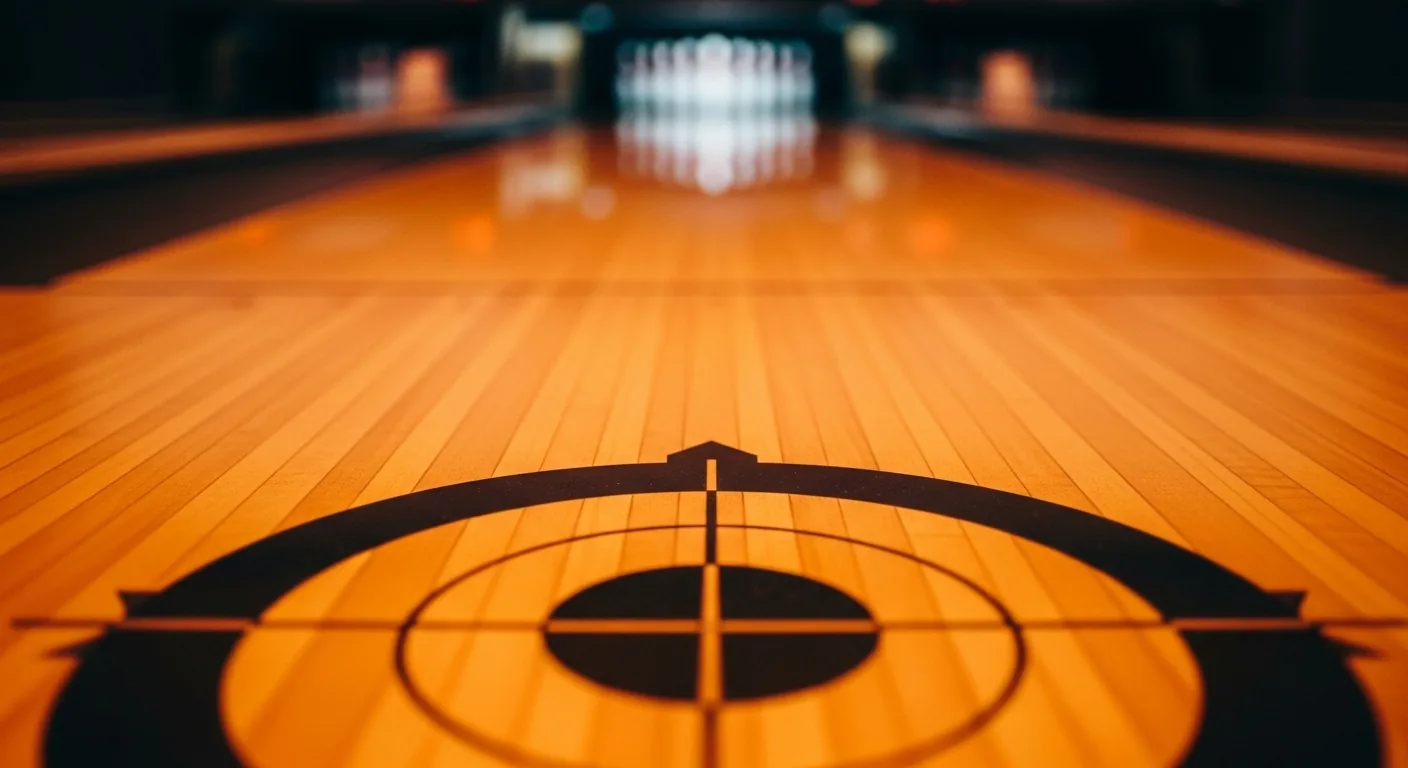
Spot bowling beats pin bowling
Pin bowling (staring at the pins 60 feet away) is how most beginners aim, and it's the hard way. Spot bowling — aiming at a spot on the lane close to you, like an arrow — is far more accurate because the target is near. Pick a spot and roll over it; trust that the rest of the lane does its job.
Using the arrows
The seven arrows sit about 15 feet out on boards 5, 10, 15, 20, 25, 30, 35. A right-hander throwing fairly straight often targets around the second arrow from the right (board 10). As your hook develops, your target shifts. The arrows are your primary aiming reference.
Counting boards
The 39 boards let you describe your aim precisely: 'standing on 20, targeting 10' means your slide foot is on the center board and you're rolling over the tenth board at the arrows. Thinking in boards is what makes adjustments possible.
Finding your strike line
Your strike line is the path that sends the ball into the pocket. Find it by experimenting: note where your feet start, where you target, and where the ball ends up, then adjust until pocket hits repeat. Once you know your line, you can move off it predictably for spares and lane changes.
Adjusting your target
When the ball misses, move your target or feet rather than changing your swing. The common rules of thumb (like moving feet and target a set number of boards) let you chase the pocket as oil transitions. A repeatable swing plus smart target moves beats trying to steer every shot.