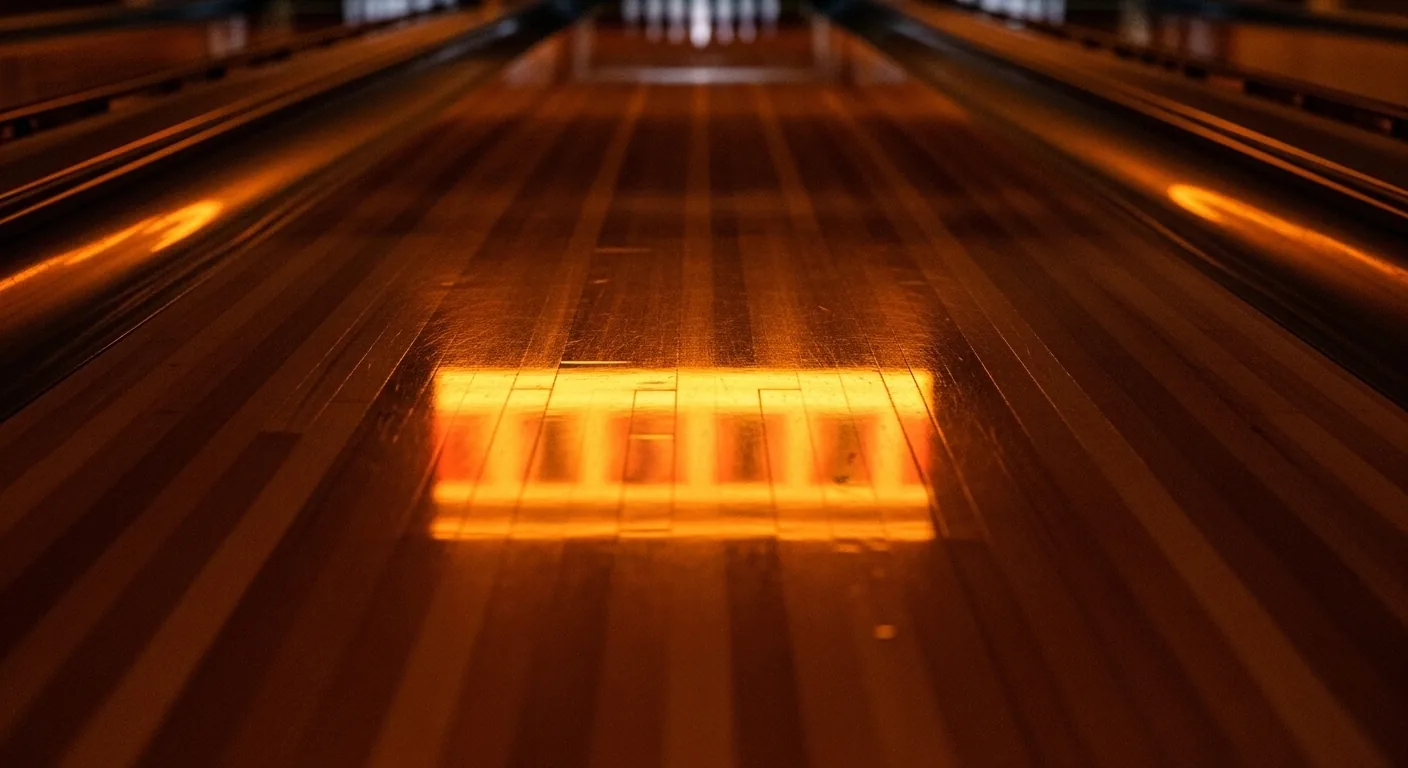
Lanes are oiled (and you can't see it)
Every lane gets a coat of conditioning oil applied in a specific pattern. It's nearly invisible, which is why beginners have no idea it's there. But it's the single biggest factor in how your ball travels down the lane.
Oil makes the ball slide; dry makes it hook
Where there's oil, your ball slides without gripping. Where the lane is dry, the ball grabs and hooks. Most patterns put more oil in the middle and toward the front, with the lane drying out near the pins and along the edges. That's why your ball skids straight, then hooks at the end. See why a ball hooks.
House patterns are forgiving by design
The everyday pattern at your local center — the 'house shot' — is built to be forgiving. It typically has dry outside boards that help steer wayward shots back toward the pocket. It's why you can get away with imperfect shots in casual play.
Sport patterns are flat and brutal
Competition uses 'sport' patterns: flatter, more even oil with no friendly funnel. They demand precise accuracy and reward bowlers who can truly read the lane. The gap between a house shot and a sport pattern is enormous — it's why pro scores on TV can look 'low' to casual bowlers.
Oil moves as you bowl
Here's the part that catches people out: oil doesn't stay put. As balls roll through it, they carry oil down the lane and into the dry areas, so the pattern 'breaks down' and your ball reacts differently by the third game than the first. Recognizing this and adjusting is the heart of lane play.
Ready to read the lane?
Our lane play guide turns this knowledge into the moves that keep you in the pocket as the oil changes.