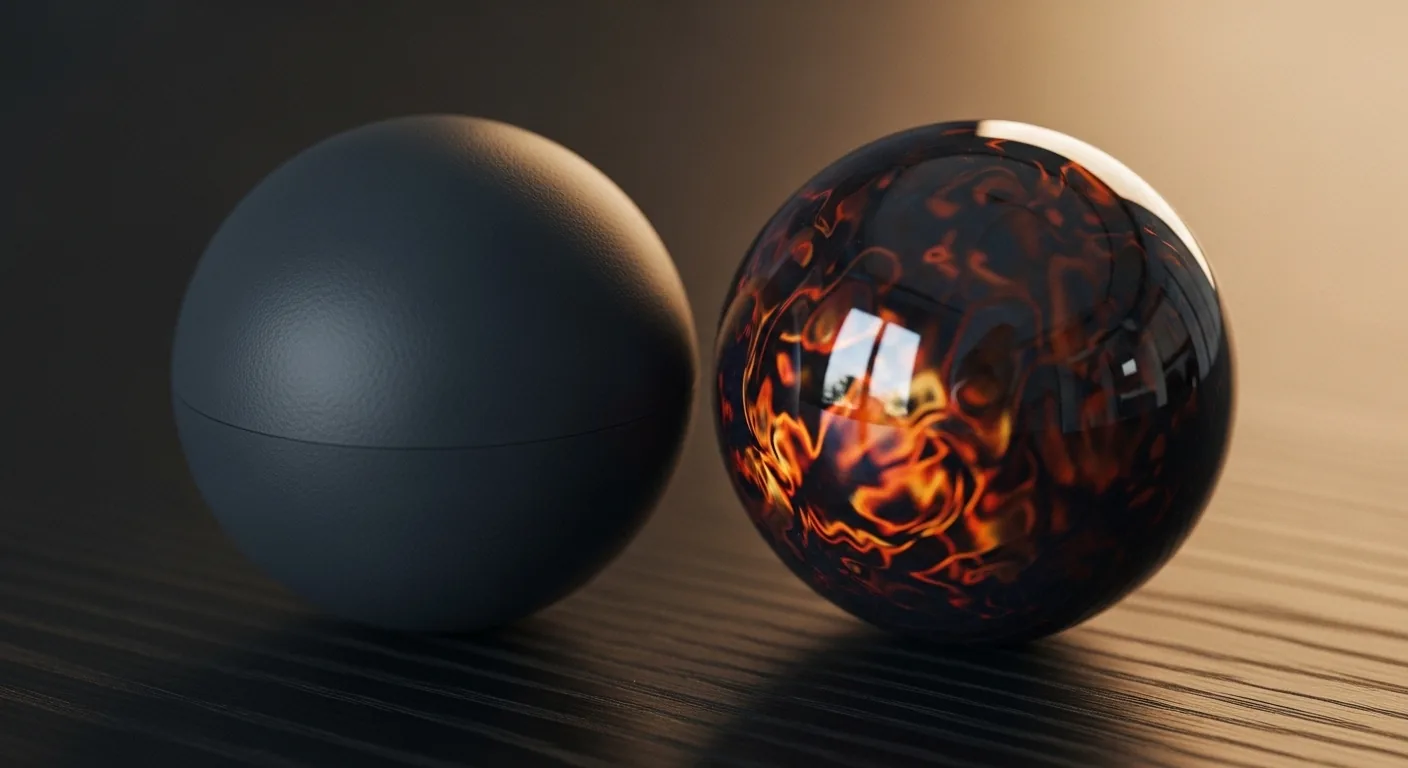
Plastic balls go straight
Plastic (polyester) balls are hard and smooth, so they barely react to the lane — they roll more or less straight. That sounds like a weakness, but it's exactly what you want for one job: shooting spares. A straight ball goes where you aim, which makes corner pins far easier.
Reactive balls hook
Reactive resin balls have a tacky, porous shell that grips the lane and curves toward the pocket. That hook lets the ball enter the pins at an angle straight balls can't match, which means more strikes. This is the ball you throw first in each frame. The full science is in how bowling balls work.
So which do you buy first?
If you can only buy one and you want to learn to hook, get an entry-level reactive ball — it's the ball that teaches you the modern game. But the smartest first purchase for most people is actually both: an entry reactive for strikes and an inexpensive plastic ball for spares.
Why owning both wins
Here's the logic: your reactive strike ball hooks, which is great for the pocket but risky on a lone corner pin (a hooking ball has more ways to miss). Switch to your straight plastic ball for spares and your accuracy jumps. This two-ball setup is what most league bowlers use, and it's the foundation of every spare system.
What about urethane?
You'll hear about urethane too — it sits between plastic and reactive, with a smooth, controllable hook. It's having a real revival on tough lane conditions, but it's usually not a beginner's first purchase. File it away for later.
Ready to choose?
See specific picks across budgets in our best balls for beginners guide, or compare ball types side by side.